 Environment & Health
GS Paper 2 · 14 August 2026
Food safety is a chain-of-custody problem, not a brand promise
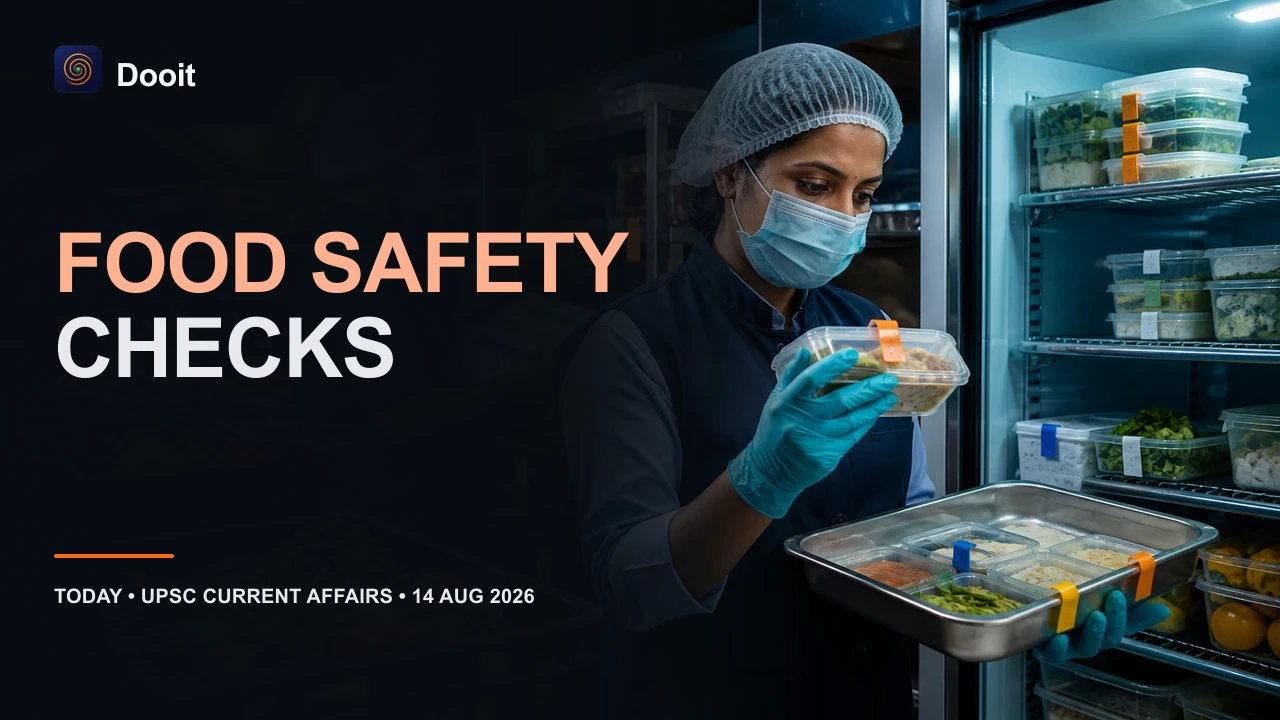
Karnataka's Food Safety and Drug Administration inspected businesses from roadside eateries and hotels to fast-food chains, public canteens and quick-commerce warehouses. Findings included expired food, rotten meat and vegetables, mislabelling, poor storage and hygiene, and concerns over used cooking oil.
Why UPSC cares
The GS II issue is regulatory capacity and the GS III issue is a rapidly changing food supply chain. A consumer sees a meal or app listing, while risk can originate in sourcing, cold storage, labelling, warehouse handling, kitchen hygiene or repeated oil use. Brand or price cannot substitute for evidence of compliance. Preventive governance combines risk-based inspections, trained staff, laboratory capacity, traceability, proportionate penalties, time-bound correction and transparent information that helps consumers make safer choices.
How to study this story
Map the chain before proposing more raids. Food moves from producer or importer to transporter, warehouse, processor, kitchen, platform and consumer. Temperature abuse, expired stock, misleading labels or contamination can arise at several nodes, and inspection only at the restaurant misses upstream risk. A mature model allocates inspection frequency by product, volume, past violations and vulnerability rather than treating every business identically. Digital records can link batches, suppliers and test results, but they need accurate entry and privacy safeguards. Laboratories must return results fast enough for enforcement to matter. Penalties should deter deliberate or repeated danger while allowing verified correction of minor lapses; arbitrary enforcement can push small vendors away from registration. Add public communication carefully. Publishing a final, reasoned order can improve accountability, but premature naming before confirmation may be unfair. For quick-commerce, responsibilities should be clear between platform, warehouse operator, seller and delivery chain. Training and simple compliance tools matter for small establishments just as much as sanctions. The source supports inspection findings across categories; it does not justify saying every hotel, eatery or warehouse in a category is unsafe. Conclude with a regulatory loop: risk intelligence guides inspection, reliable testing guides action, action produces compliance data and that data improves the next inspection cycle.
The larger paper context
Frame the answer around prevention, detection, enforcement and learning. Prevention sets hygiene, storage, labelling and oil-use standards and trains food handlers. Detection targets high-risk products and facilities, takes defensible samples and uses accredited laboratories. Enforcement distinguishes correctable lapses from serious or repeated violations while preserving due process. Learning publishes trends, updates risk scores and coordinates across local bodies, food regulators, health departments and digital platforms. Quick-commerce warehouses make the last-mile data and storage link especially important.
Probable question
How can Indian cities move from episodic food raids to preventive, risk-based food-safety governance?
Quick practice check
Q1
Which newer distribution point was expressly included in the inspection sweep?
- Quick-commerce warehouses
- Only private homes
- Only farms outside Karnataka
- No storage facility
Show answer
Correct answer: Quick-commerce warehouses
The report explicitly included warehouses supplying quick-commerce platforms along with eateries, hotels, chains and canteens.
Q2
Which set of gaps was reported?
- Expired food, rotten produce, mislabelling, poor storage and hygiene
- Only incorrect restaurant music
- Only parking violations
- No food-related problem
Show answer
Correct answer: Expired food, rotten produce, mislabelling, poor storage and hygiene
The inspections reported problems across food condition, labelling, storage, hygiene and used cooking oil.