 Disaster Management
GS Paper 3 · 14 August 2026
Chamoli tunnel deaths: shift the answer from rescue to risk governance
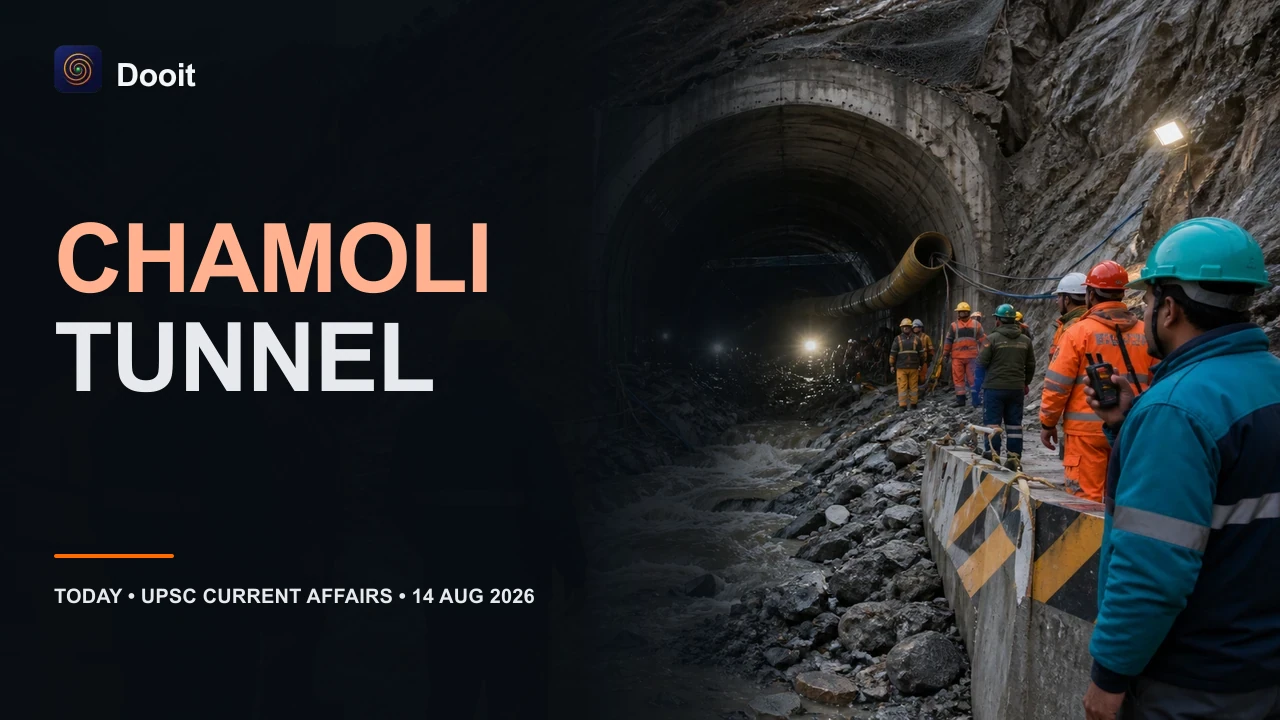
Seven people died and 14 were injured after water and debris entered an under-construction hydroelectric-project tunnel in Chamoli on August 13. The response brought together the Army, ITBP, NDRF, SDRF, district teams, police and CISF personnel.
Why UPSC cares
For GS III, the event is not merely a rescue narrative. It is a case for examining construction-stage hazard assessment, occupational safety in confined spaces, drainage and inflow monitoring, emergency exits, contractor accountability and the cumulative risk of infrastructure in a fragile Himalayan setting. The multi-agency response also tests incident-command clarity: many capable organisations do not automatically produce coordination unless roles, communications and handovers are defined before the emergency.
How to study this story
Begin with the distinction between a hazard and a disaster. Water ingress, loose material and confined underground work may be identifiable hazards; deaths occur when exposure, design weakness, communication failure or inadequate preparedness convert them into a disaster. Next, map responsibility. The project proponent, contractor, safety officers, regulator, district administration and specialised responders have different duties. A credible system fixes ownership before an accident, rather than discovering it during rescue. Third, apply a Himalayan lens without making unsupported claims about the immediate cause: fragile geology, steep gradients, intense precipitation, difficult access and cascading infrastructure can amplify consequences, but a specific causal conclusion needs an inquiry. Fourth, treat workers as risk-bearing citizens, not an afterthought. Attendance records, language-appropriate briefings, personal protective equipment, stop-work authority and safe evacuation are governance instruments. Finally, evaluate the rescue structure. The presence of the Army, ITBP, NDRF, SDRF, police, CISF and district teams shows capacity; the analytical question is whether they shared an incident commander, interoperable communications and a common operating picture. Conclude with independent safety audits during construction, real-time thresholds for stoppage, transparent reporting of near misses and compulsory implementation of inquiry findings.
The larger paper context
Organise the answer across prevention, preparedness, response and recovery. Prevention asks whether geological, hydrological and construction risks were assessed and updated as excavation progressed. Preparedness covers sensors, alarms, refuge areas, drills, worker registers and redundant escape routes. Response requires a unified command, specialised tunnel rescue, medical triage and reliable information for families. Recovery includes an independent inquiry, compensation, safety redesign and public disclosure of lessons. This life-cycle frame prevents the common UPSC mistake of equating disaster management only with the arrival of response forces.
Probable question
Why must disaster management for Himalayan infrastructure begin at project design and construction rather than at rescue?
Quick practice check
Q1
What did the report say entered the under-construction tunnel?
- Water and debris
- Only sea water
- Volcanic lava
- No material entered the tunnel
Show answer
Correct answer: Water and debris
The reported accident followed water and debris entering the under-construction hydroelectric-project tunnel.
Q2
Which combination correctly lists agencies reported in the rescue?
- Army, ITBP, NDRF and SDRF
- Only the Election Commission and RBI
- Only municipal tax officers
- No specialised response agency
Show answer
Correct answer: Army, ITBP, NDRF and SDRF
The report names the Army, ITBP, NDRF and SDRF, alongside district teams, police and CISF personnel.