 Economy & Energy
GS Paper 2 & 3 · 14 August 2026
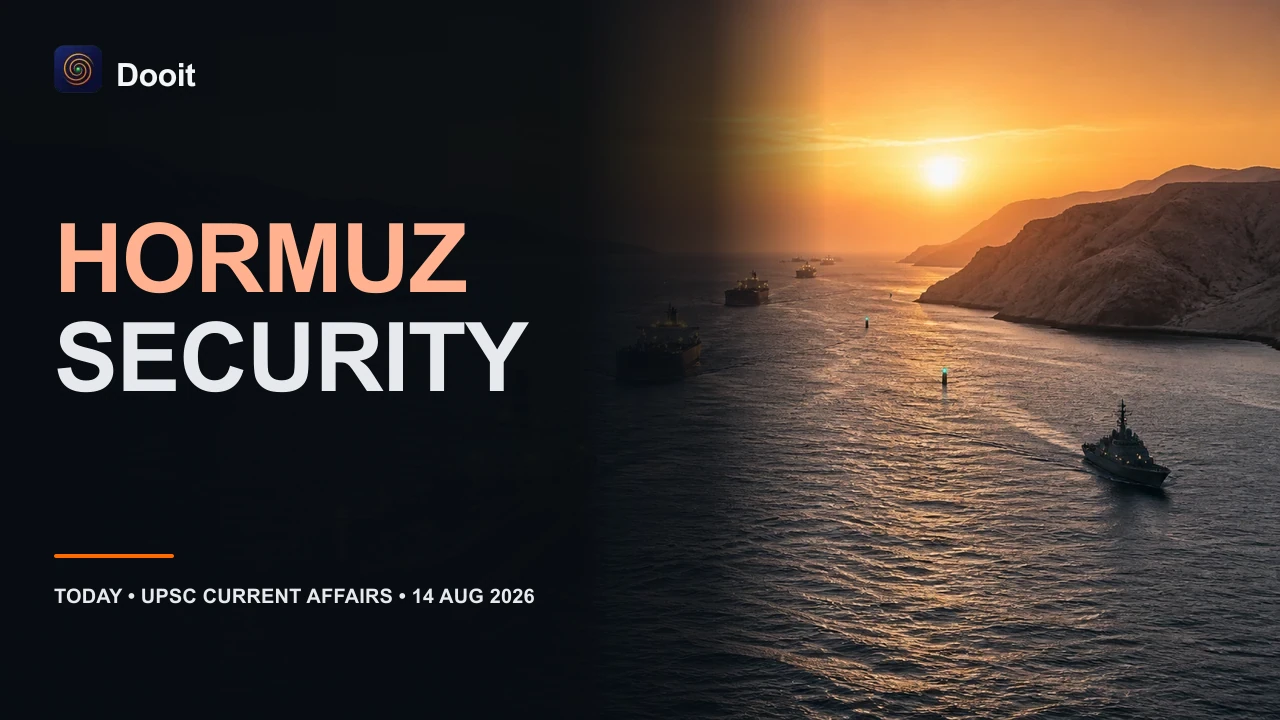
Strait of Hormuz: where naval coercion becomes an energy-security shock
At the editorial cutoff, The Hindu's live record linked a threatened indefinite U.S. naval blockade of Iran, faltering ceasefire talks, lower oil supply and attacks around the Strait of Hormuz. The UAE also condemned an Iranian attack on two ADNOC-linked vessels; no injuries were reported.
Why UPSC cares
The strait was described as carrying a fifth of global oil and liquefied natural gas before the war, so a regional confrontation can transmit rapidly into shipping risk, energy prices and inflation. For India, connect imported-energy exposure with freight and insurance costs, strategic reserves, diaspora and seafarer safety, naval domain awareness and balanced West Asia diplomacy. Keep legal and policy terms separate: a naval blockade, sanctions, freedom of navigation and a negotiated maritime arrangement are not interchangeable.
How to study this story
Draw a small chokepoint map in your notes: Persian Gulf, Strait of Hormuz, Gulf of Oman and Arabian Sea. The geography explains why a narrow passage has consequences far beyond the immediate belligerents. Next, separate three layers. The factual layer at the cutoff contains the threatened blockade, supply pressure, the stated share of energy transit and the vessel incident. The analytical layer traces likely channels such as freight, insurance, prices and diplomatic stress. The uncertainty layer recognises that this was a live report; later military or diplomatic developments cannot be silently imported into this edition. For GS II, discuss India's strategic autonomy and relationships across West Asia, including the need to protect citizens and commercial interests without treating the region as a binary camp. For GS III, explain energy security as availability, affordability, accessibility and resilience, not just the volume of crude purchased. Measures should be layered: diversify suppliers and fuels, maintain reserves, strengthen ports and shipping information, hedge commercial risk and pursue de-escalation. Avoid saying the strait carries all global energy trade; the source's verified formulation is a fifth of global oil and LNG before the war. That precision distinguishes an evidence-based answer from dramatic but unsafe narration.
The larger paper context
Build the answer as a transmission chain. A security incident raises the probability of delay or damage; insurers and shipowners price that risk; freight and energy costs rise; importing economies face pressure on inflation, fiscal choices and external balances. Then add state responses: supplier and route diversification, strategic stocks, demand management, naval escort or awareness, evacuation readiness and diplomacy for de-escalation. Balance is essential. Military measures may protect passage but can also intensify escalation, while commercial adaptation reduces exposure without resolving the underlying conflict.
Probable question
How can disruption at a maritime chokepoint transmit a regional conflict into India's economy and foreign policy?
Quick practice check
Q1
Why is the Strait of Hormuz especially important in the report?
- It carried a fifth of global oil and LNG before the war.
- It carries every container shipped worldwide.
- It is located between the Atlantic and Baltic seas.
- The report said it has no energy relevance.
Show answer
Correct answer: It carried a fifth of global oil and LNG before the war.
The source directly links the strait to a fifth of global oil and liquefied-natural-gas transit before the war.
Q2
What did the UAE statement cited in the live report concern?
- An attack on two ADNOC-linked vessels transiting the strait
- A new census law
- A Himalayan tunnel project
- A conference on irrigation tanks
Show answer
Correct answer: An attack on two ADNOC-linked vessels transiting the strait
The UAE condemned an Iranian attack on two ADNOC-linked vessels; the report said no injuries were reported.