 International Relations
GS Paper 2 · 27 August 2026
India-Vietnam Coast Guard Dialogue Turns Maritime Partnership into Operational Cooperation
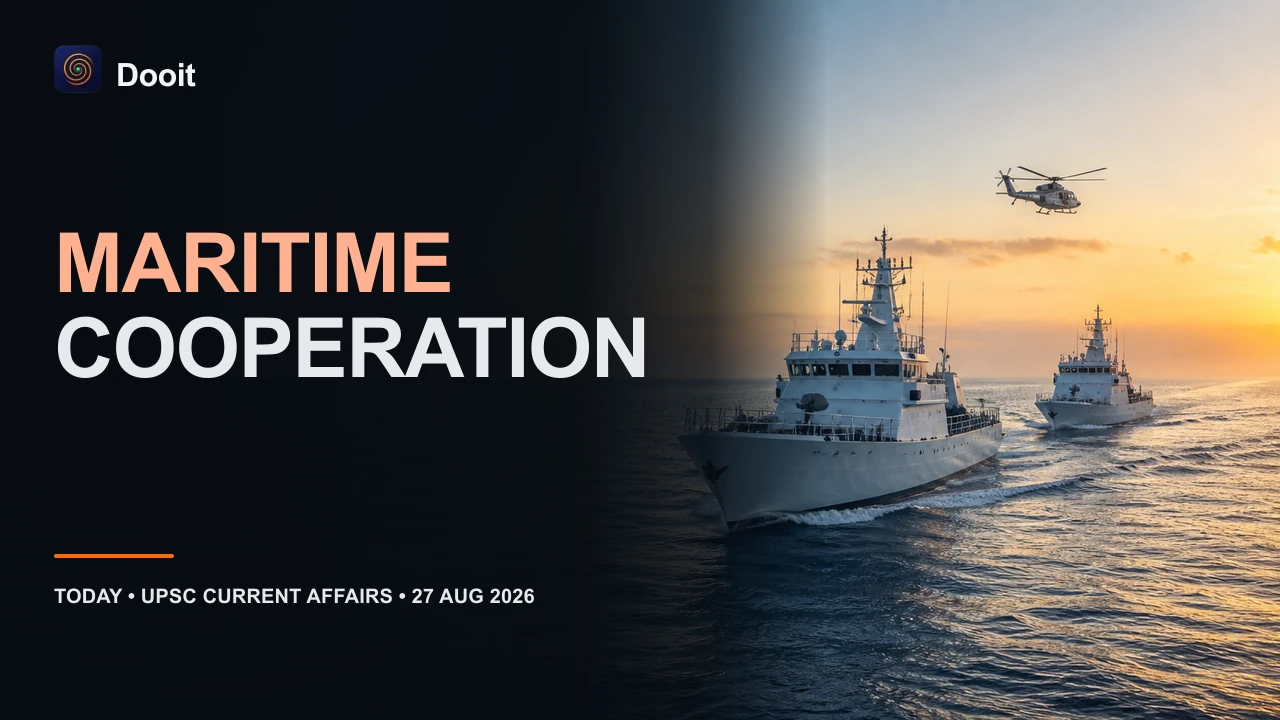
The 7th High-Level Meeting between the Indian Coast Guard and Vietnam Coast Guard was held in Chennai on 25 August under their 2015 cooperation memorandum. The two services reviewed professional exchanges and ship visits and focused on maritime search and rescue, law enforcement, marine-pollution response and capacity building. They also emphasised regular institutional interaction, training and sharing of operational practices. The meeting matters because many Indian Ocean and Indo-Pacific risks are transboundary: distress at sea, illegal activity and pollution cannot be handled effectively by one jurisdiction acting alone. Coast-guard cooperation is distinct from a military alliance. It builds practical interoperability for constabulary, humanitarian and environmental duties while supporting wider trust between India and Vietnam. Durable cooperation requires clear legal authority, communication protocols, compatible procedures and evaluation after exercises or real incidents.
Why UPSC cares
For GS Paper 2, connect India-Vietnam relations with the Act East policy and institutional maritime cooperation. For GS Paper 3, relate interoperability to coastal security, disaster response and marine-pollution control.
How to study this story
Maritime security is often presented through warships and deterrence, but routine safety depends heavily on constabulary institutions. Coast guards board vessels, coordinate rescue, investigate violations and contain pollution under domestic and international law. Cooperation therefore needs more than diplomatic goodwill. A distress call must move through known contact points; teams need shared terminology, compatible communications and rules for transferring rescued persons or evidence. Training and ship visits build familiarity, but interoperability should be measured through response time, coordination errors and lessons incorporated into standard procedures. India and Vietnam also bring different operating experience, creating scope for reciprocal learning rather than one-way capacity assistance. The relationship should remain legally bounded. Maritime law enforcement must respect jurisdiction, human rights, fisheries rules and environmental obligations. Information sharing needs safeguards for sensitive operational data. Pollution response illustrates the public-goods dimension: currents ignore national boundaries, and early notification can reduce ecological and livelihood damage. Smaller coastal communities and seafarers are the final beneficiaries, so cooperation should include civilian agencies and not remain service-to-service only. UPSC answers can connect this institutional layer to Act East, a rules-based maritime order and non-traditional security. Avoid treating every engagement as strategic signalling against a third country. Its independent value lies in making rescue, enforcement and environmental response more predictable, lawful and effective.
The larger paper context
For GS Paper 2, examine how commissions, working groups and coast-guard dialogues turn diplomatic intent into rules, procedures and measurable cooperation. Separate institutional capacity from ceremonial signalling.
Probable question
Coast-guard partnerships can deepen regional security without becoming military alliances. Analyse their role in maritime law enforcement, humanitarian response and environmental protection.
Quick practice check
Q1
The 7th India-Vietnam Coast Guard meeting was held under which framework?
- A 2015 cooperation memorandum
- A customs union
- A mutual-defence treaty
- A fisheries subsidy agreement
Show answer
Correct answer: A 2015 cooperation memorandum
The official release places the meeting under the 2015 Memorandum of Understanding on Coast Guard Cooperation.
Q2
Which activity best reflects coast-guard rather than military-alliance cooperation?
- Nuclear deterrence
- Territorial annexation
- Collective war planning
- Search and rescue plus pollution response
Show answer
Correct answer: Search and rescue plus pollution response
Search and rescue, law enforcement and pollution control are core constabulary and humanitarian functions.
Related previous-year questions
- UPSC GS-2: India and its neighbourhood relations; bilateral and regional groupings affecting India's interests