 Science & Technology
GS Paper 3 · 31 August 2026
iFMS Evolves from Fertilizer Transactions into an Agricultural Decision System
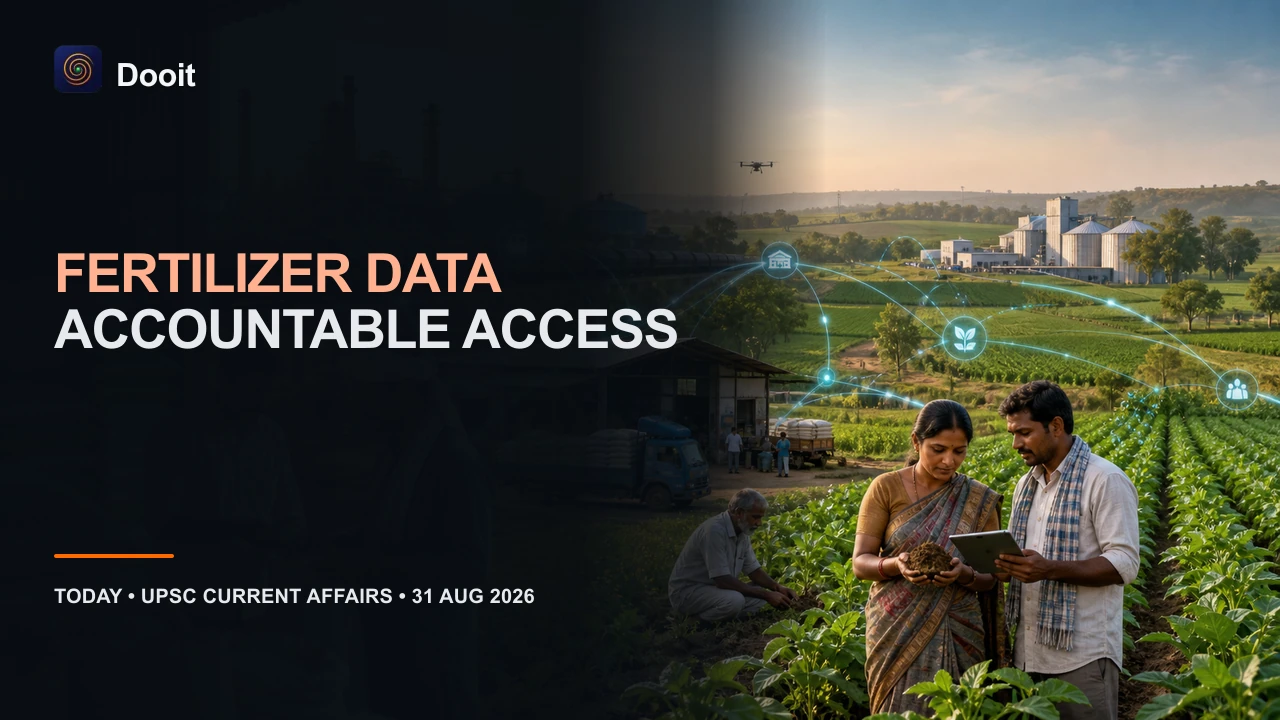
The Integrated Fertilizer Management System is being expanded from transaction recording into a national monitoring and decision-support platform. Developed by NIC for the Department of Fertilizers, iFMS connects production, imports, movement, stocks, retail sales and subsidy processing. It covers more than 14 crore Aadhaar-linked buyers, over 2.5 lakh retailers and around 7 crore metric tonnes of annual fertilizer sales while supporting nearly Rs 2 lakh crore in annual subsidy administration. New dashboards allow monitoring from national to retailer level, and integration with farmer, land, crop and logistics data is intended to detect unusual demand, improve availability and audit subsidy bills. The scale creates public value only with safeguards. Data errors can exclude genuine farmers or misread legitimate regional demand; central visibility can also encourage one-size-fits-all allocation. Strong grievance correction, minimal data collection, clear responsibility and independent audits are therefore essential to convert data integration into timely fertilizer access rather than opaque automated control.
Why UPSC cares
For GS Paper 3, link iFMS with agricultural inputs, fertilizer subsidy, DBT, supply-chain monitoring, AgriStack, fiscal governance and data protection. Evaluate both efficiency gains and exclusion, privacy and accountability risks.
How to study this story
Fertilizer management must reconcile national procurement and subsidy with highly local variation in crops, soils, seasons and weather. iFMS creates visibility across production, movement, stock and retail sale, allowing officials to identify shortages or unusual transactions earlier. Integration with land and crop information can support allocation and audit, but the same integration magnifies the effect of inaccurate records. A tenant, sharecropper or farmer with delayed land updates may appear inconsistent even when demand is legitimate. Automated flags should therefore initiate verification, not punishment, and a human-readable correction channel must exist at the retail and district levels. Privacy requires purpose limitation: fertilizer access does not justify unlimited reuse of identity, land or purchase histories. Dashboards should show data quality, unresolved grievances and false-positive rates as well as transaction volume. Digital vehicle tracking can improve logistics, while electronic subsidy bills reduce paperwork and strengthen traceability. Yet central dashboards cannot replace local agronomic judgment or encourage excessive input use merely because stock is available. Soil health, balanced nutrients and extension remain necessary. Public value should be measured through timely availability, lower diversion, faster verified subsidy settlement and reduced regional mismatch. A trustworthy decision system is contestable, auditable and capable of learning from local exceptions rather than treating every data pattern as proof of misuse.
The larger paper context
For GS Paper 3, follow the full value chain. Standards, data, finance and technology matter only when they improve resilience, ecological safety, market access and last-mile outcomes without creating opaque exclusion.
Probable question
Data integration can improve fertilizer availability and subsidy audit, but only contestable and accountable systems protect farmers. Evaluate the evolution of iFMS.
Quick practice check
Q1
What is iFMS increasingly becoming?
- A weather satellite
- A judicial registry
- An integrated fertilizer monitoring and decision-support platform
- A crop insurance company
Show answer
Correct answer: An integrated fertilizer monitoring and decision-support platform
The system now links transactions, logistics, stocks, farmer information and subsidy monitoring for decisions.
Q2
What is the safest response when integrated data flags an unusual farmer purchase?
- Treat the flag as proof and block permanently
- Verify the case and provide an accessible correction path
- Publish personal data
- Ignore every anomaly
Show answer
Correct answer: Treat the flag as proof and block permanently
An analytical flag should trigger proportionate verification and a contestable process, not automatic exclusion.
Related previous-year questions
- UPSC GS-3: Issues of direct and indirect farm subsidies and agricultural inputs